

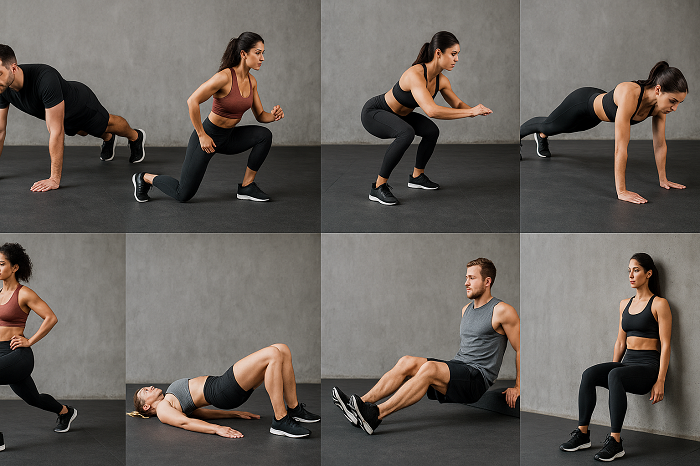
Building strength does not always require a gym membership, expensive machines, or heavy weights. In fact, some of the most effective strength-building exercises rely solely on your body weight, gravity, and proper form. Whether you are working out at home, traveling, or simply prefer minimalist fitness routines, bodyweight training can help you increase muscle mass, enhance endurance, and improve functional strength in a convenient and sustainable way. This guide explores the top 10 strength-building exercises without equipment and provides the depth, clarity, and practical insight you need to use them effectively.
The Power of Bodyweight Strength Training
Bodyweight exercises allow you to strengthen multiple muscle groups simultaneously, improve core stability, and develop better balance and mobility. These movements mimic natural human motion, making them useful for people of all fitness levels. They can be modified to be easier or more challenging and integrated into routines focused on strength, fat loss, flexibility, or performance. Because they require no equipment, they offer complete freedom and accessibility, making them ideal for those who want structured fitness with minimal barriers.
Top 10 Strength-Building Exercises You Can Do Anywhere
1. Push Ups
Push ups are one of the most trusted strength movements for building upper body power. They work the chest, shoulders, triceps, core, and even the upper back when performed with proper form. The beauty of the push up is its versatility, since you can switch to diamond push ups, incline push ups, or decline push ups to increase difficulty or target different muscles. They help improve posture, upper body stability, and pressing strength that transfers into everyday activities like lifting, pushing, and carrying.
2. Squats
Squats are foundational for lower body strength. This movement trains the glutes, quads, hamstrings, and core while supporting better mobility in the hips and knees. Performing squats regularly improves your ability to sit, stand, climb, lift, and move with more control. You can increase intensity by slowing down the tempo or progressing to single leg variations like pistol squats. The squat is essential for building balanced lower body strength without equipment.
3. Planks
The plank is a powerhouse core exercise that strengthens your abs, obliques, lower back, and shoulders while enhancing overall body stability. Unlike crunches, planks engage deep core muscles responsible for posture and spinal support. Holding proper plank form helps reduce the risk of back pain and improves balance and functional control during other strength training movements. Longer holds and side planks further challenge your endurance and stability.
4. Lunges
Lunges are excellent for unilateral strength, meaning they work one leg at a time. This helps correct muscle imbalances and builds stability in the hips, knees, and ankles. Forward, reverse, and walking lunges all engage the glutes, quads, and hamstrings while testing balance and coordination. Lunges are especially useful for strengthening muscles involved in running, climbing stairs, or lifting objects.
5. Glute Bridges
Glute bridges are one of the most effective ways to activate and strengthen the glute muscles. They also support the lower back and hamstrings, helping improve posture and reduce the strain that comes from sitting for long periods. Glute bridges enhance hip stability and contribute to better performance in activities involving jumping, lifting, or sprinting. Variations like single leg glute bridges offer an even greater challenge.
6. Tricep Dips
Tricep dips help strengthen the triceps, shoulders, and chest using only your body weight. You can perform them on the floor or using a stable chair or bench for added range of motion. Strong triceps improve arm definition and support better performance in pressing exercises like push ups. Consistent practice also enhances shoulder stability and helps balance overall upper body strength.
7. Mountain Climbers
Mountain climbers combine strength, speed, and core engagement into one dynamic movement. This exercise strengthens the shoulders, arms, core, and hip flexors while elevating your heart rate for added calorie burn. Mountain climbers are excellent for building functional strength because they train stability and coordination while improving cardiovascular endurance. Adding controlled reps or timed intervals can increase intensity.
8. Supermans
Supermans target the lower back, glutes, and posterior chain, making them a highly valuable exercise for improving back strength and posture. Many people overlook back strength when training without equipment, but the Superman exercise fills that gap effectively. It helps counteract the effects of sitting, supports spinal alignment, and enhances core balance by activating muscles that are often underused.
9. Burpees
Burpees are a full body strength and conditioning exercise that challenge your muscles and cardiovascular system at the same time. They engage your chest, arms, legs, core, and back while boosting endurance and power. Burpees help build explosive strength and can be adapted to suit beginners or advanced athletes. Although intense, they deliver significant results, especially for those seeking strength and fat burning in a single movement.
10. Wall Sits
Wall sits may look simple, but they challenge your lower body strength and muscular endurance in a powerful way. This isometric exercise targets the quads, glutes, and hamstrings, helping improve stability and stamina. Holding the position for longer intervals intensifies the burn and helps build stronger, more resilient leg muscles. Wall sits pair well with squats and lunges for a complete lower body routine.
Bringing It All Together into a Strength Routine
To maximize results, combine these exercises into a structured routine performed three to four times per week. Focusing on proper form and controlled movement ensures that your muscles work efficiently and safely. As you grow stronger, increase your repetitions, extend the duration of isometric holds, or progress to advanced variations. Adding consistency, hydration, balanced nutrition, and adequate rest will further support your strength training goals.
Conclusion
Strength building without equipment is not only possible but incredibly effective when you use the right exercises. The top 10 movements highlighted here offer a balanced approach to building upper body, lower body, and core strength while improving endurance, stability, and mobility. Whether you are a beginner or advanced, these exercises can be adapted to your fitness level and performed anywhere. Commit to a consistent routine, challenge yourself gradually, and enjoy the freedom of a strength training program that requires nothing but your own body and motivation.
Frequently Asked Questions
Q1. Which bodyweight exercise builds the most strength?
Answer. Push ups and squats are among the top strength builders because they recruit major muscle groups and allow for progressive overload with variations.
Q2. How often should I do strength building exercises without equipment?
Answer. Three to four sessions per week is ideal for most people, allowing your muscles time to recover between workouts.
Q3. Can bodyweight exercises replace the gym?
Answer. Yes, many people achieve excellent strength and muscle definition through bodyweight training alone, especially when routines are progressively increased in difficulty.
Q4. How long does it take to see strength results with no equipment?
Answer. Most people notice strength improvements within four to six weeks when training consistently and using proper form.
Q5. Are bodyweight exercises good for beginners?
Answer. Absolutely. They provide a safe, controlled way to learn movement patterns and build foundational strength before adding weights or advanced variations.


